
Arabic opens doors. Over 400 million people speak it worldwide, and learning online has never been easier. Whether you’re a kid curious about a new language or an adult starting fresh, online Arabic classes for beginners let you learn at your own pace, from your couch, with real teachers who actually know what they’re doing. This guide walks you through everything—from picking the right course to avoiding the mistakes most beginners make.
Why Learn Arabic When You’re Just Starting Out?
There are solid reasons to jump into Arabic. Some people want to read the Quran. Others plan a trip to Egypt or Jordan and don’t want to be completely lost. Maybe you have family in the Middle East, or you’re just drawn to the language. Whatever your reason, online Arabic classes for beginners make it realistic.
The internet changed how people learn languages. Ten years ago, you needed expensive tutors and rigid schedules. Now? You can find native speakers willing to teach from anywhere. Video calls work. Apps exist. Teachers specialize in beginners. The barrier to entry is basically gone.
Modern Standard Arabic or a Dialect? Which One Should You Choose?
This is the first decision when picking online Arabic classes for beginners. And it matters.
Modern Standard Arabic (MSA) – The Formal Version:
Modern Standard Arabic is what you hear on Al Jazeera, read in newspapers, and find in literature. It’s the Arabic taught in schools across the region. Most textbooks use it. Religious texts, official documents, and formal speeches all use MSA.
If you go this route:
- You can eventually read classic literature and understand the news
- Grammar lessons make sense (teachers explain rules in a structured way)
- Your skills transfer across every Arabic-speaking country
- But nobody actually speaks it in coffee shops or markets
Colloquial Dialects – How People Actually Talk:
Every Arab country has its own dialect. Egyptian Arabic is everywhere because of Egyptian films and TV. Levantine Arabic works in Syria, Lebanon, Jordan, and Palestine. Moroccan, Saudi, Emirati—each has its flavor.
If you pick a dialect:
- You can actually chat with people in that country
- You sound less like a textbook
- But you might not understand someone from a different region
- Grammar is looser and harder to pin down
What Should Beginners Actually Do?
Most language teachers recommend starting with Modern Standard Arabic. It gives you solid foundations. Then, after a few months, layer in a dialect if you want to speak with locals. Online Arabic classes for beginners usually follow this approach because it works.
What to Look for in a Good Online Arabic Course?
Not all online Arabic classes for beginners are the same. Some are just videos recorded in 2015. Some are expensive and rigid. Some teachers barely speak English. Here’s what actually matters.
Native Speakers Who Know How to Teach:
This sounds obvious but it’s not. Being fluent in Arabic doesn’t mean someone can explain grammar to someone who doesn’t know any. A good teacher can slow down, repeat, and actually answer questions instead of just reciting lessons.
Check the teacher’s background. Have they taught non-Arabic speakers before? Do they get reviewed well? Can you have a trial lesson first?
Actually Customizable Lessons:
Everyone’s different. Some people learn by memorizing. Others need to hear things spoken. Kids respond to games and colors. Adults want to understand the “why” behind grammar rules.
The best online Arabic classes for beginners adapt to how you learn. They’re not locked into a one-size-fits-all curriculum.
A Real Curriculum, Not Just Wings and Prayers:
Too many courses just have a teacher winging it. You need structure.
Your course should cover:
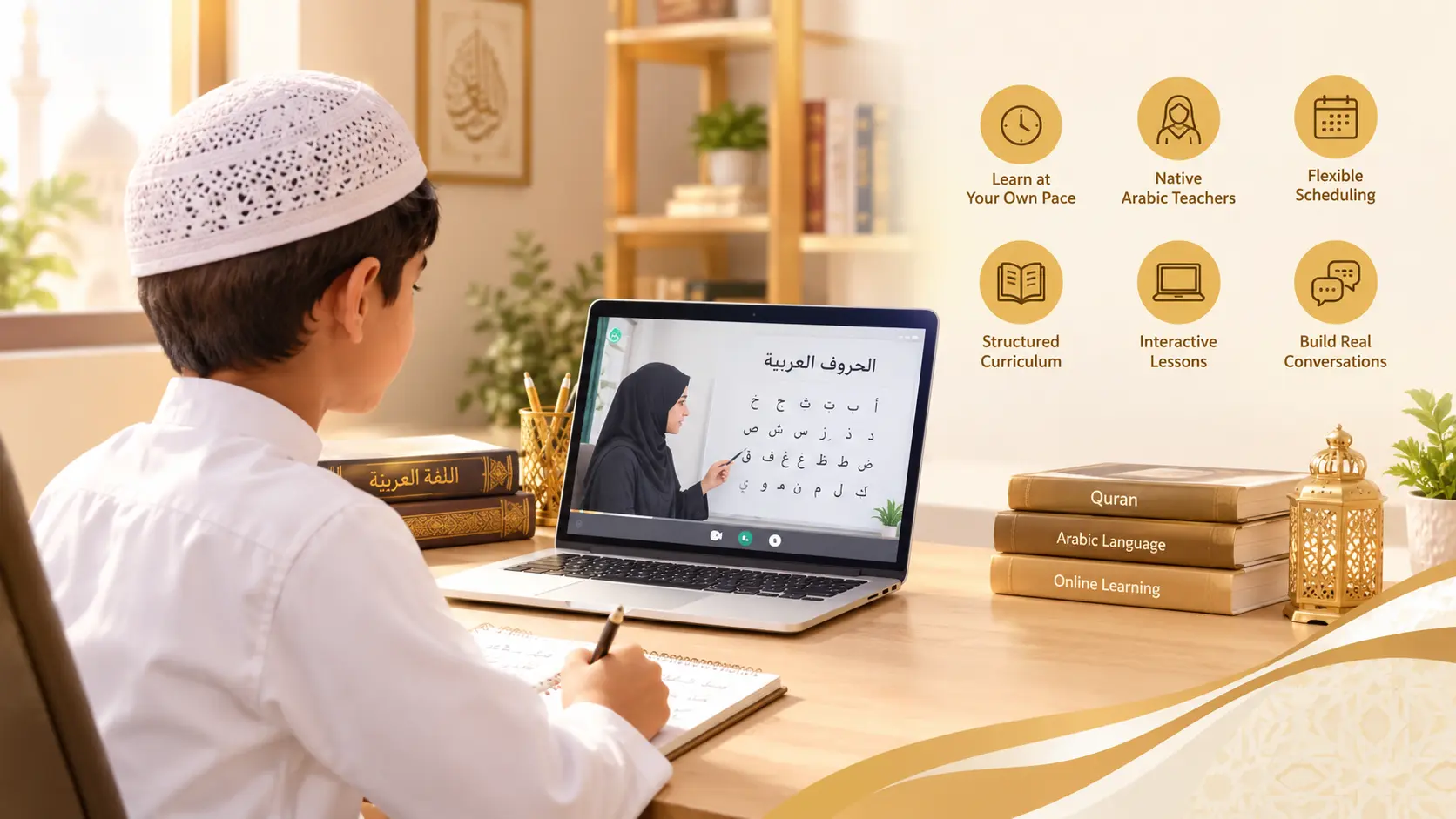
- The 28 Arabic letters and how they connect
- Basic pronunciation (those guttural sounds that trip people up)
- Everyday words and phrases
- How Arabic roots work (it’s different from English)
- Simple conversations so you’re not just memorizing isolated words
Flexible Timing:
Your schedule is probably chaotic. You might be free at 7am one day and 9pm the next. Good platforms let you pick lesson times without locking you into fixed schedules.
Price That Won’t Wreck Your Budget:
Online Arabic classes for beginners can range from free (YouTube and apps) to $1000+ per month for intensive private tutoring. Most people land somewhere in the middle—$10 to $30 per hour with a private teacher, or $30 to $50 per month for structured courses.
Free resources work as supplements. Apps like Duolingo teach basic vocabulary. YouTube has decent alphabet lessons. But if you want real fluency, you need actual interaction with a human.
The Alphabet: Where Almost Everyone Starts?
The Arabic alphabet freaks people out. Twenty-eight letters, and they’re written right to left. But here’s the thing: it’s actually logical once you see the pattern.
Each letter connects to the next one. The same letter looks different depending on whether it’s at the start, middle, or end of a word. This takes about 1 to 2 weeks to really get comfortable with if you’re practicing daily.
Most online Arabic classes for beginners spend at least the first few weeks here. They’ll have you trace letters, hear pronunciation, and write words over and over. It feels repetitive, but that’s the point. Your brain needs that drilling.
Grammar Without the Headache:
Arabic grammar has a reputation for being unnecessarily complicated. That’s because English speakers expect things to work like English, and Arabic just doesn’t.
Verbs are tense-y. Nouns come with built-in pronouns. Adjectives come after nouns, not before. Cases matter. Gender matters (everything is masculine or feminine).
But here’s the secret: you don’t need to master grammar to start speaking. Kids in Yemen learn to talk without understanding verb conjugations. They pick it up through repetition.
The best online Arabic classes for beginners teach grammar as you go, not as some standalone nightmare. You learn a phrase. Then the teacher shows you how it works. Then you practice.
Actually Speaking—Not Just Memorizing:
This is where most learners get stuck. They know vocabulary. They’ve seen grammar rules. But when someone speaks to them in Arabic, their brain goes blank.
The fix is simple: you need to practice speaking out loud with feedback. That’s where private tutors or group conversation classes help. Apps can’t hear your accent. They can’t tell you that you’re rolling your Rs too hard.
The best online Arabic classes for beginners include speaking practice. Conversation exercises. Guided dialogues where you know what’s coming but you still have to produce the sounds yourself.
Best Way to Learn Fusha Arabic Ultimate Beginner Guide
How Long Until You’re Actually Competent?
This depends on what “competent” means to you.
- Reading the alphabet: 1 to 2 weeks
- Basic survival phrases: 1 to 2 months
- Simple conversations: 3 to 6 months
- Actually understanding native speakers: 1 to 2 years
- Fluency: 2 to 3 years of consistent work
These are rough estimates. Some people are faster. Some are slower. Consistency matters more than intensity.
Arabic language origin tree Complete Guide to Its History
The Money Side: What You’ll Actually Pay
Choose the class schedule that best fits your learning goals and availability. Our flexible online Arabic classes are available from two to five classes per week, with monthly plans designed to make consistent learning simple and accessible. For students focused on Quran memorization, we also offer a dedicated Hifz program with 20 hours of classes per month.
| Schedule / Week | Classes per Month | Fee |
|---|---|---|
| 2 Classes / Week | 08 / Month | $28 / Month |
| 3 Classes / Week | 12 / Month | $43 / Month |
| 4 Classes / Week | 16 / Month | $56 / Month |
| 5 Classes / Week | 20 / Month | $70 / Month |
| Hifz Classes (hour) | 20 h / Month | $125 / Month |
Common Mistakes Beginners Make:
Watch out for these.
Jumping straight to conversations:
you need letters first. You need basic vocabulary. Jumping to conversations before you have foundations just frustrates you.
Memorizing without understanding:
Your brain will forget isolated vocab in three days. But if you understand how words connect (through roots), you remember them.
Stopping when it gets hard:
Around week 4 or 5, most people feel like they’re not progressing. Then they quit. Everyone feels this. It passes.
Only studying, never speaking:
Reading grammar notes is comfortable. Speaking is awkward and embarrassing. That’s exactly why you need to do it.
Picking a course based on price alone:
Cheap isn’t always bad. Expensive isn’t always good. Pick based on what your learning style needs.
Amazing 10 Facts About Arabic Language You Must Know
Finding a Teacher (Or a Course) That Actually Works:
Here’s the practical process:
Step 1: Decide if you want Modern Standard Arabic or a specific dialect.
Step 2: Pick a platform. If you want structure, try an academy. If you want flexibility, try a tutor marketplace like Preply or iTalki.
Step 3: Take a trial lesson. Most platforms offer one. You’ll know in 15 minutes if the teaching style works for you.
Step 4: Commit to 8 to 12 weeks minimum before judging. Too many people give up after three lessons.
Step 5: Practice outside of class. Even 10 minutes a day of review keeps things fresh.
Basic Arabic Lessons for Beginners Step by Step Guide
Tools That Complement Your Classes:
Online Arabic classes for beginners get more effective when you add resources between lessons.
Apps:
Duolingo keeps vocabulary sharp. Anki (flashcard app) helps with memorization. Forvo lets you hear native speakers pronounce words.
Podcasts:
Arabic Coffee Break is made specifically for learners. It’s slow, clear, and actually interesting.
TV and movies:
Once you’ve done a few months of classes, watch simple Arabic shows with English subtitles. Your brain learns rhythm and hearing patterns this way.
Language exchange:
Find someone learning English who speaks Arabic. You spend 30 minutes speaking English, 30 minutes speaking Arabic. It’s free and less formal than tutoring.
Should Kids and Adults Learn the Same Way?
Not exactly.
For kids:
Online Arabic classes for beginners work best when they’re colorful, have games, move quickly, and celebrate small wins. Kids have shorter attention spans but longer-term memory for sounds and patterns. They pick up pronunciation faster.
For adults:
Adults want to understand the system. They want to know why grammar works a certain way. They have patience for longer lessons but less time to actually study. Adults get frustrated if they’re not seeing progress.
Most good platforms offer options for both, but they structure them differently.
Ready to Start Your Arabic Journey?
The best time to begin was yesterday. The second-best time is today.
If you’re serious about learning Arabic—whether you want to read the Quran, connect with your heritage, or simply expand your mind—Quran Beauty Online brings together everything in this guide. Native Arabic teachers who specialize in beginners. A curriculum that starts with letters and builds to real conversations. Flexible scheduling that actually works with your life. Trial lessons so you can see if it’s a fit before you commit.
You don’t need to be perfect. You don’t need to be young. You just need to start.
Take the first step: Book a free trial lesson at Quran Beauty Online. Spend 30 minutes with a real teacher. Ask your questions. See if the teaching style clicks. Then decide.
Thousands of people—kids in Canada, parents in Australia, students in Europe—have started exactly where you are. Most of them are shocked at how fast progress comes when you have the right teacher and show up consistently.
FAQ
How much time should I spend on online Arabic classes for beginners each week?
Three to five hours per week is a solid commitment. That could be three 1-hour lessons plus 30 minutes of daily app work. Or two lessons plus more daily practice. Consistency beats intensity.
Can I really learn Arabic only through online classes without living in an Arabic country?
Yes. You won’t pick up the casual slang or cultural nuances as fast, but thousands of people have done it. You need good material and you need to practice speaking.
What if I have zero language learning experience?
Even better. You don’t have bad habits from another language. You’ll probably progress faster than someone who studied Spanish and expects Arabic to work the same way. Online Arabic classes for beginners are designed for exactly this.
Are group classes better than private lessons?
Depends on your personality. Group classes are cheaper and give you classmates for motivation. Private lessons are tailored to you and move at your pace. Try a group trial lesson and a private trial. See which feels right.
How do I know if I’m actually making progress?
You should be able to read new letters each week, recognize words in context, have basic conversations by week 8 or 12, and understand simple video content by month 6. If you’re not hitting those milestones, your course might not be working for you.