
The online Quran Ijazah course at Quran Beauty Online prepares you to recite the whole Quran before an Al-Azhar-certified teacher and earn an Ijazah with a written sanad. You choose recitation from the Mushaf or Hifz from memory, in the Hafs ‘an Asim narration, through live one-to-one Zoom classes of 30 minutes.
Course at a glance
From $28 a month · 7-day full refund
You earn your Quran Ijazah online by reciting the entire Quran, one-to-one, to a teacher who holds an Ijazah, correcting every mistake along the way and passing a final assessment.
Your teacher hears the whole Quran from you, from Al-Fatihah to An-Nas, in regular sessions. This full recitation (khatm) is the core of every Ijazah in Quran recitation.
You pick one of 2 tracks. The recitation track is read from the Mushaf; the Hifz track is recited from memory and suits students who have already memorised the Quran or most of it.
Teachers are trained to catch small errors, such as a ghunnah held too short or a heavy letter read light, and correct them on the spot, before they repeat across the next juz.
In the last stage, you recite large portions in one sitting so the teacher can check that your Tajweed holds up across all surahs. Your plan is adjusted as the exam gets closer.
A Quran Ijazah is a formal certification from a qualified teacher confirming that you recite the Quran correctly, with full Tajweed, in a recognised narration (riwayah). It usually comes with a sanad that traces your recitation back to the Prophet ﷺ.
The Arabic word ijazah means permission or licence.
An Ijazah in Quran is the teacher’s written permission confirming that you received the recitation correctly from them, and that you may pass it on to others.
The Ijazah is the permission; the sanad is the chain of names attached to it. Your Ijazah certificate lists your teacher, your teacher’s teacher and so on, back through the reciters of the narration to the Prophet ﷺ.
A Quran sanad links each teacher to the one they recited to. In the Hafs narration, the chain passes through Hafs ibn Sulayman (died 180 AH) and his teacher Asim ibn Abi al-Najud (died 127 AH), then back through the Companions to the Prophet ﷺ.
A Quran Ijazah authorises you to teach the recitation you received, in the narration written on it. Mosques, schools and academies in the UK, US, Canada and Australia set their own hiring rules, so check what a specific employer requires.
The Quran has always been passed on by hearing, not by reading alone. A teacher must hear every word from you to confirm it matches what they received, which is why an Ijazah can’t come from a recorded course or a written test.
The 2 main types of Quran Ijazah are by method, recitation from the Mushaf or from memory, and by narration, such as Hafs ‘an Asim or one of the other qira’at.
An Ijazah in Quran recitation means you have read the entire Quran from the Mushaf with full Tajweed, correct pronunciation, rhythm, pauses and etiquette before your teacher. It is also called an Ijazah in Tajweed or a Tajweed Ijazah, and it does not require memorisation.
An Ijazah in Hifz means you have recited the whole Quran from memory, with accurate Tajweed and stable retention. The course adds memorisation support and preparation for a formal Hifz assessment.
Hafs ‘an Asim is the narration most students start with, because it is the most widely recited today, including in most printed copies of the Quran in the UK, US, Canada and Australia. Both tracks in this course are taught in Hafs.
Other narrations, such as Warsh, or the full ten qira’at, are not a separate track in this course. Your Hafs Ijazah builds the base for studying them later, as an optional advanced step.
Choose the recitation track if you read fluently but haven’t memorised the Quran; choose the Hifz track if you already hold most or all of it from memory. If you’re unsure, the free assessment settles it.
The difference is how you recite in front of the teacher: from the Mushaf for an Ijazah in recitation, and from memory for an Ijazah in Hifz. The Tajweed standard is the same for both.
Pick recitation if your goal is to teach reading with Tajweed; pick Hifz if you have memorised the Quran and want your memorisation certified.
| Ijazah in recitation | Ijazah in Hifz | |
|---|---|---|
| How you recite | From the Mushaf | From memory |
| Memorisation needed first | No | Most or all of the Quran |
| What is tested | Accuracy, Tajweed, fluency, etiquette | The same, plus retention across all 30 juz |
| Who it suits | Fluent readers, teachers, imams | Huffaz and advanced Hifz students |
| Typical length | Often 12 to 18 months | Depends on how solid your memorisation is |
To join the online Quran Ijazah course, you need to read Arabic script (not transliteration), know the basic Tajweed rules and commit to regular classes with daily practice. Hifz-track students also need large portions, or all, of the Quran memorised.
Students who don’t meet these yet are usually advised to improve their reading or Tajweed first.
The online Quran Ijazah programme is open to any student who reads the Quran fluently with basic Tajweed, including teachers, imams, Huffaz, sisters and non-Arabic speakers.
Students who have finished basic Quran reading can move on to formal certification, and those who completed an introductory Tajweed course are ready for the Tajweed Ijazah course. The ijazah in Quran gives their recitation a recognised standard and a named teacher behind it.
Teachers already running classes in a mosque or weekend school can formalise their recitation with an Ijazah, which some institutions ask for before a teacher leads formal Quran classes.
Imams and advanced reciters use the course to have their recitation checked line by line by a qualified teacher, and to receive a sanad for the narration they lead prayer in.
Huffaz and Hifz students close to finishing can upgrade to Ijazah level. The Hifz track tests your memorisation across all 30 juz and adds structured review before the final assessment.
You don’t need to speak Arabic to take this Ijazah course online, as long as you read the script fluently. Teachers are native Arabic speakers who explain corrections in English.
Sisters can request a female Ijazah teacher. Female tutors hold their own Ijazah and teach adults, so a sister can complete her full recitation with a woman teacher.
You study the Hafs ‘an Asim narration, in either the recitation or the Hifz track. Advanced study of other narrations or the ten qira’at can follow later, but it is not offered as a track in this course.
The online Quran Ijazah course follows 7 steps, from a free assessment of your recitation to receiving your Ijazah and written sanad.
Book the free trial. Your teacher listens to you recite, checks your Tajweed and identifies your level.
The teacher notes the letters, rules and habits you need to fix, so your plan starts where your recitation is weakest.
You choose recitation or Hifz, and a male or female teacher. Teachers hold formal Ijazah from recognised institutions.
Your plan in the Quran Ijazah course sets a schedule for recitation, Tajweed theory and revision, with the number of classes a week that suits your goal.
You recite the whole Quran to your teacher: from the Mushaf on the recitation track, or from memory on the Hifz track.
The final examination tests your accuracy, Tajweed and consistency across the whole Quran.
Once you meet the standard, you receive an Ijazah certificate in recitation or Hifz, with the sanad from your teacher written on it.
Steps 4 and 5 continue until you finish the full khatm, and your plan is adjusted as the exam gets closer. Step 1 starts in your free trial class.
Online Quran Ijazah classes are taught live and one-to-one on Zoom, in 30-minute sessions where you recite and the teacher corrects, explains rules and records your progress.
Ijazah Quran classes are yours alone. Most of the 30 minutes goes on your recitation, which is the only way to get through all 30 juz with a teacher listening.
The teacher listens to every word, stops you at an error, recites it correctly and has you repeat it. An Ijazah teacher won’t pass a page with a mistake left in it.
Between classes, you practise the next passage at home. Coming prepared means class time goes on correction, not on first reading.
Your teacher records your progress after each session and checks larger portions at set points, so you know which juz are ready and which need more work.
Classes run on Zoom in the morning, the evening or at weekends, set in your time zone: GMT in London, EST or PST in North America, AEST in Sydney.
The final Quran Ijazah assessment checks your accuracy, Tajweed and consistency across the whole Quran, from the Mushaf on the recitation track or from memory on the Hifz track.
Before the exam, you recite large portions to show your standard holds across all surahs, including the surahs you finished months ago.
The teacher checks each letter’s makharij and qualities, and how you apply rules such as noon sakinah, madd and qalqalah. An Ijazah in Tajweed is granted only when these hold across the whole Quran.
You must keep the same standard every time you recite, over weeks. A strong first juz followed by weaker later ones won’t meet the criteria.
Any errors that appear in the assessment are corrected and rechecked. The Ijazah is granted on recitation that is free of clear mistakes.
You qualify after completing a full khatm with your assigned teacher, passing the formal assessment of correctness, consistency and etiquette, and showing that your standard holds over time.
If you aren’t ready, your teacher adjusts your plan and continues the classes until you meet the standard. Some students finish in 12 to 18 months; others need more time, and that is normal.
After completing your Quran Ijazah, you receive an Ijazah certificate in recitation or Hifz, a documented sanad from your teacher and permission to teach the recitation you received.
The Ijazah is issued only after you finish the full khatm and pass the final assessment. It names you, your teacher and the track you completed.
Your sanad is written on the certificate. It lists your teacher and the chain of teachers before them, back to the Prophet ﷺ.
The certificate states the narration you recited in, Hafs ‘an Asim, so anyone reading it knows exactly what you are licensed to teach.
Your Ijazah covers the track and narration you completed. An Ijazah in recitation from the Mushaf does not certify memorisation, and a Hafs Ijazah does not cover other qira’at.
Before you start, ask 3 things: who your teacher is, which riwayah they hold and whether the sanad will be given to you in writing. After you qualify, your certificate names each teacher in the chain, so it can be checked against your teacher’s own Ijazah.
Quran Beauty Online gives you a one-to-one Ijazah teacher from Al-Azhar, a written sanad on completion and a full refund if you are not happy within the first 7 days.
Teachers are Al-Azhar-certified, native Arabic speakers with formal Ijazah from recognised institutions, trained to detect subtle errors.
Your plan follows your level and track. A teacher preparing an imam for a Hafs Ijazah works differently from one checking a young Hafiz’s memorisation.
You recite directly to your teacher in every class, and corrections are made live at the exact word.
Male and female Ijazah tutors are available, trained to teach adults and children. Sisters can ask for a female teacher on request.
You can book Ijazah Quran classes in the morning, the evening or at weekends, in your own time zone, and change your plan as your exam gets closer.
Your teacher records your progress after each session, so you always know which juz are complete and what is left before the final assessment.
The course has 3 levels: Tajweed foundation and accurate recitation, advanced Tajweed with Hifz support, and Ijazah preparation with a full khatm.
Graduates of Al-Azhar University and Cairo University’s Dar Al-Uloom — several hold Ijazah in the Hafs ’an ’Asim narration. Male and female teachers are both available.
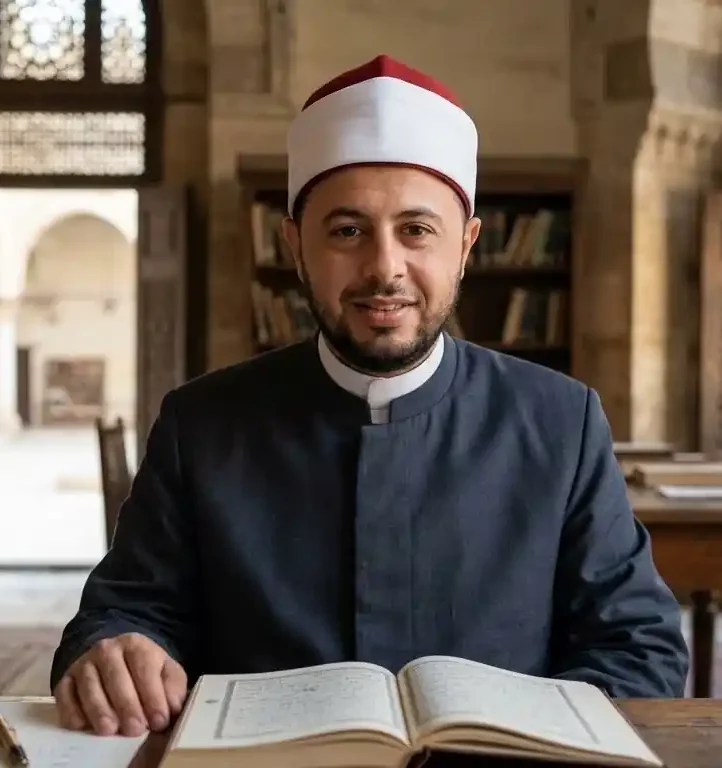
Quran, Tajweed & Hifz Teacher
Male · Arabic · English
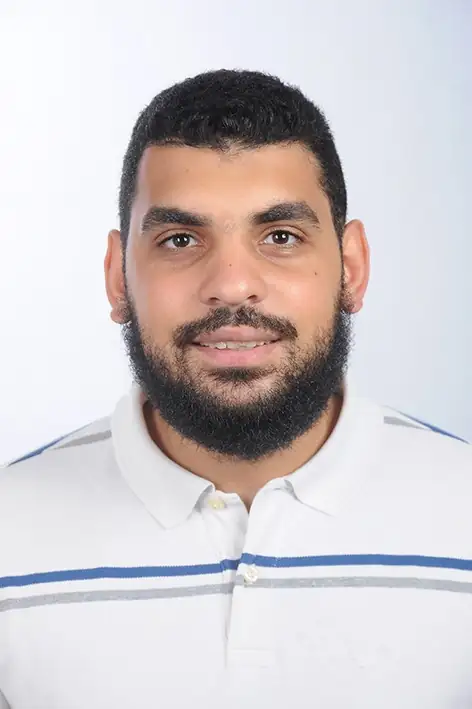
Quran, Tajweed & Arabic Teacher
Male teacher

Quran, Tajweed & Tafseer Teacher
Female · Arabic · English
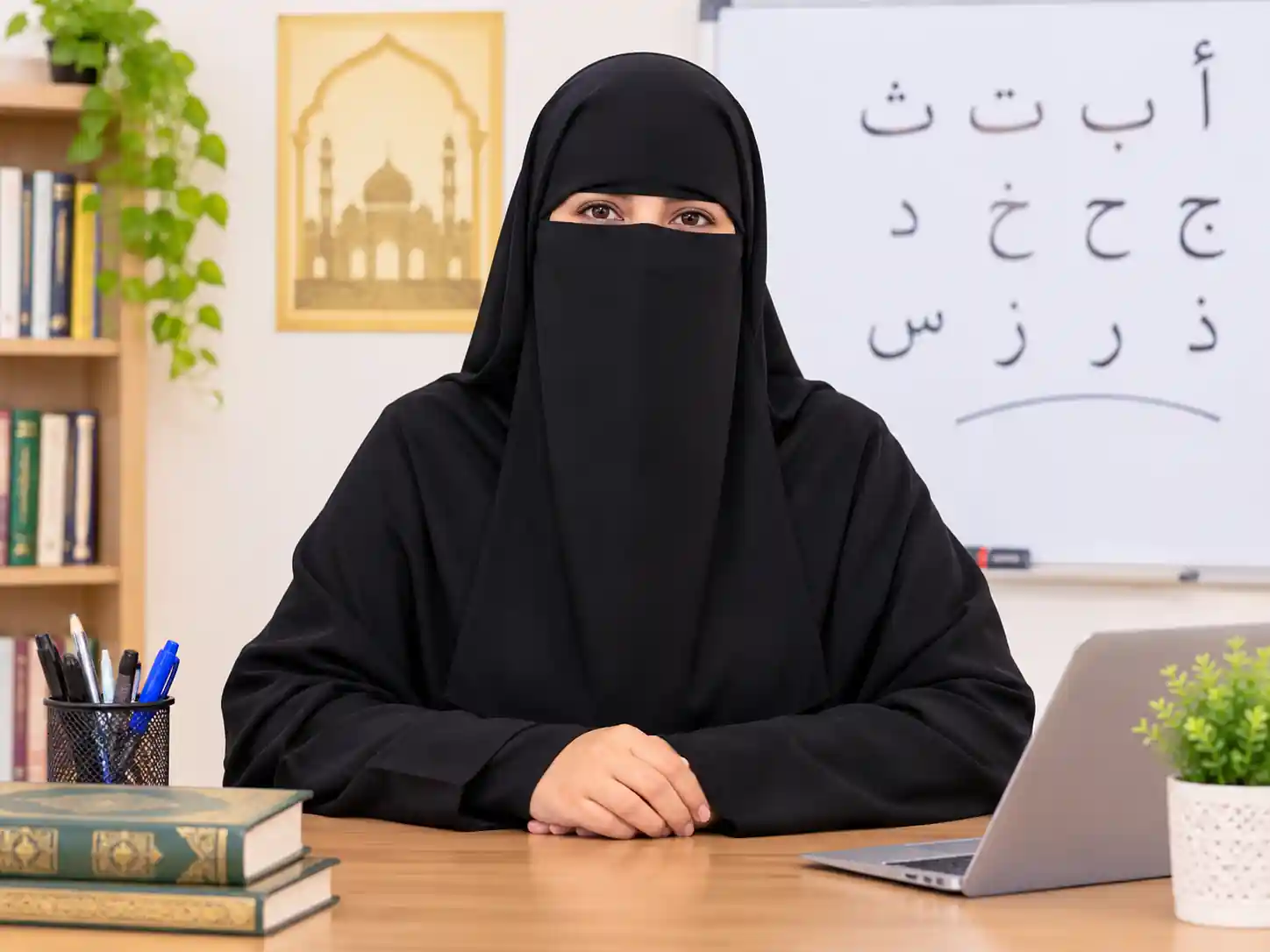
Quran, Tajweed & Qira’at Teacher
Female · Arabic · English
Completing a Quran Ijazah takes about 12 to 18 months for many students who start with basic reading skills, and longer for others. A sample plan shows how the time splits:
| Months | What you complete? |
|---|---|
| 1 to 3 | Tajweed classes, pronunciation fixes, Juz Amma and selected surahs |
| 4 to 9 | 10 to 15 juz with advanced Tajweed |
| 10 to 18 | All 30 juz and preparation for the final exam |
Your timeline depends on your starting level, your track, how many classes you take each week and how much you practise at home. The Hifz track also depends on how solid your memorisation is.
A student who already reads with correct Tajweed spends less time on corrections and more on recitation. Old habits, such as a clipped madd, take time to unlearn.
Three to 5 classes a week suits most Ijazah students, because the whole Quran must be recited to the teacher. Two classes a week works, but stretches the timeline.
Daily practice keeps your standard from slipping between classes. Reading your next passage aloud before class means the session goes on correction, not on first reading.
Fix your class days, set a daily practice time and keep it, even on busy days. A short, regular slot each morning works better than a long session once a week.
Monthly plans of 2 to 5 classes a week, 30 minutes each, cost from $28 to $70 in the US and from £21 to £52 in the UK. In Canada and Australia, they cost from $39 to $97.
| Compare plans30-minute classes | 2 classesa week$28per month | SUITS MOST LEARNERS3 classesa week$43per month | 4 classesa week$56per month | 5 classesa week$70per month |
|---|---|---|---|---|
| Classes per month | 8 classes | 12 classes | 16 classes | 20 classes |
| Class length | 30 min | 30 min | 30 min | 30 min |
| Best for | Busy schedules | Most learners | Faster progress | A goal date, such as Ramadan |
| One-on-one live on Zoom | ✓ | ✓ | ✓ | ✓ |
| Male or female teacher | ✓ | ✓ | ✓ | ✓ |
| Weekly progress checkpoints | ✓ | ✓ | ✓ | ✓ |
| 7-day money-back guarantee | ✓ | ✓ | ✓ | ✓ |
| Free trial | Free trial | Free trial | Free trial |
You can book your free Ijazah trial in 3 steps:
One free lesson with a certified teacher tells you where you stand, with no card and no pressure.
Still deciding? Your free trial class answers anything not covered here.
Yes. In an Ijazah course online, you earn your Quran Ijazah by reciting the whole Quran live to a qualified teacher over Zoom and passing the final assessment, then receiving your certificate and sanad.
Yes, when the teacher holds a valid sanad and hears your full recitation live. What makes an Ijazah authentic is the teacher's qualification and the complete recitation, not the room you sit in.
The Ijazah is the permission to recite and teach; the sanad is the list of teachers behind it. Your certificate carries both, linking you to your teacher's chain.
Yes. The Ijazah in Quran recitation is read from the Mushaf and needs no memorisation. Only the Hifz track requires the Quran from memory.
No, not for the recitation track of this Quran Ijazah course. For the Hifz track, you need large memorised portions or the whole Quran, and the course supports you through review and testing.
You need the basic rules, such as makharij, noon sakinah and madd, and fluent reading of Arabic script. Students who aren't there yet build their reading first, then join the Tajweed Ijazah course.
You study Hafs 'an Asim, the most widely recited narration. Other narrations or the ten qira'at can be studied later as optional advanced study.
Many students finish in 12 to 18 months, depending on starting level, classes per week and daily practice. Some students need longer, and plans adjust to that.
A teacher who holds an Ijazah, with a connected sanad, in the same narration and track, can issue a Quran Ijazah after hearing the student's complete recitation.
Yes. Your Ijazah gives permission to teach the recitation you received. Employers such as mosques or schools may add their own requirements, so check them locally.
Yes. Sisters can request a female Ijazah teacher, who holds her own Ijazah and can hear the full recitation and final assessment.
Yes, if you read Arabic script fluently and know the basic Tajweed rules. Teachers explain corrections in English throughout the course.
Yes. Every Ijazah class is live and one-to-one, because the teacher must hear each word of your recitation.
The online Quran Ijazah course costs from $28 to $70 a month in the US and from £21 to £52 in the UK, plus a small one-time registration fee.
The teacher listens to you recite, checks your Tajweed, identifies your level and recommends a track and study plan. It is a full lesson with no card needed.
You keep studying with your teacher, who corrects the weak points and adjusts your plan, then you sit the assessment again once you meet the standard.
You choose your class times in your time zone, and your plan can change as you approach the exam. The academy does not publish a teacher-change policy, so ask the team before you subscribe.
Yes. On qualifying, you receive an Ijazah certificate in recitation or Hifz with the sanad from your teacher written on it.
An authentic Ijazah starts with one honest check of your recitation. Book your free trial, hear where your Tajweed stands and get a plan for your full khatm, with 7 days to ask for a full refund if you subscribe.
 Course Enrollment