When you need to find the best Islamic online courses, you need to research the tutors, the subjects they teach, and the teaching methods that they use before you invest your time and money. This guide addresses the differences between an effective Islamic online course and a generic course on memorizing the Quran, learning Arabic, learning Tajweed, and learning Islamic studies; how to sequence them; and how to keep them on track. From beginner to parent to working adult, there are clear criteria to make informed decisions and get started learning right away.
What Are the Best Islamic Online Courses?
The best Islamic online courses include certified teachers, organized courses, and one-on-one live lessons in the Quran, Arabic, tajweed, and Islamic studies. Most worthwhile programs feature live sessions instead of pre-recorded video presentations, scheduled progress checks, and male and female and child classes.
Seek academies that not only teach you to memorize the Quran but also provide you with feedback on your recitation right from the start, because being able to recite the Quran correctly and retain it for the long term relies on immediate correction from an expert teacher, not a video you can pause and forget.
Which Online Islamic Course Is Best for Beginners?
Beginners should begin with a Noorani Qaida or introductory course in Tajweed, which introduces the correct pronunciation of the Arabic letters, and then begin memorizing. A good beginner course evaluates the student’s starting level of reading ability in the first class and then gradually leads up to the student’s ability to recite and read with accuracy on their own.
Basic Aqeedah should be taught before Fiqh rulings in islamic studies for beginners, and the use of English in guidance helps to reduce the learning curve for non-Arabic-speaking adults in a course of Islamic studies. After selecting a starting point, the next thing that needs to be decided is which subjects to focus on first.
Explore more about quran memorization online
Are online Islamic classes effective?
Yes, online islamic classes for adults and children are effective when they are interactive, correction is provided in real time, and revision is provided regularly, which is comparable to having an in-person study circle. Courses that are pre-recorded with no live feedback are not that effective for pronunciation or memorization.
Explore more about Quran Stop Signs (Waqf): Symbols, Rules, and Examples
Can kids study Islam online?
Yes. Children aged as young as 6 years can learn the Quran and Islamic studies successfully with age-appropriate live online classes. Short storyless lessons with repetition and visuals and positive encouragement keep the young learners engaged and build their Islamic knowledge step by step.
Explore more about Online Islamic Homeschooling
What Islamic Subjects Can I Learn Online?
The Quran memorization, Tajweed, Arabic, Noorani Qaida, and Islamic studies Fiqh, Aqeedah, Seerah, and Hadith can all be learned completely online via live classes.
- Quran Memorization (Hifz): Level-based memorization plans with weekly checkpoints
- Tajweed: correct pronunciation, Makharij, and recitation rules
- Arabic language: Reading, writing, and comprehension of the Arabic language for non-native speakers; many students learn Arabic Quraan online and understand the Quraan in Arabic without translation.
- Noorani Qaida: Noorani Qaida is the basic course in letters and phonetics for absolute beginners.
- Islamic studies: quran online teaching of Fiqh, Aqeedah, Seerah and Hadith in a structured sequence
Once subjects are determined, the format (one-on-one or group) will have an impact on your progression.
Explore more about Idgham in Tajweed: Types, Rules, Letters, and Examples from the Quran
Is One-on-One Quran Tutoring Better Than Group Classes?
One-on-one tutoring often goes faster since there’s no waiting for other students to take turns learning and practicing your pronunciation, pacing, gaps in memorization, etc. Group classes are cheaper and are suitable for students who like accountability from others, while individual classes allow a tutor to correct
Tajweed errors as they arise and tailor the target for each day as per your level. Many sisters go out of their way to look for “Islamic classes for sisters near me,” and this is where online academies come in handy, as they have female instructors even if you’re not near them. Regardless of the format you choose, there are a number of things you should keep in mind before signing up anywhere.
Explore more about Comprehensive Quran Hifz Classes for Ladies
Are there accredited Islamic online programs?
Government accreditation is rare in Islamic education. Rather, good academies gain credibility based on qualified teachers, the Islamic institutions they are affiliated with, and the Ijazah, a traditional diploma that testifies that the student has learned the Quran or Islamic studies from a qualified scholar who possesses an authentic chain of transmission.
Explore more about Tafkheem and Tarqeeq in Tajweed
What Should I Look for in an Online Islamic Course?
Check for verified tutor credentials, a live class format, flexible time zones, transparent pricing, and a free trial before you enroll in any of the best Islamic online courses.
- Verified tutor credentials Ijazah certification or Al-Azhar training, not just a stated title
- Live, interactive sessions instead of pre-recorded content
- Flexible scheduling across your time zone, including evenings and weekends
- Transparent pricing with no hidden registration surprises
- A free trial class and refund policy so you can judge teaching quality first
If local “islamic courses near me” searches turn up limited options, online academies fill that gap with the same live, one-on-one correction you’d get in person. Once those boxes are checked, the real decision is sequencing which subject to start with.
Revelation Recording and Memorisation of the Holy Quran
Are free Islamic courses worth it?
Yes, free Islamic courses can be helpful in learning some of the basic concepts and exploring the subject before committing. They are sometimes missing live teacher feedback, individual learning plans, set progress monitoring, and periodic assessments; however, tutor-led courses are more suited for long-term progress.

Can converts take online Islamic courses?
Yes. The majority of Islamic learning institutions online are very welcoming of new Muslims and provide courses for the beginner learner. They usually begin with Noorani Qaida (learning to read the Quran) and basic Islamic studies, allowing teachers who are experienced in helping individuals with non-Arabic backgrounds to help them from the initial stages.
Basic Rules of Tajweed for Beginners and Correct Quran Recitation
How Do I Choose Between Quran, Arabic, and Fiqh Courses?
- Define your goal reciting fluently, understanding the Quran’s language, or applying Islamic law daily.
- Take a free trial assessment to gauge your current level in each subject.
- Start with Quran or Tajweed first if recitation accuracy is the priority.
- Add Arabic once you can recite comfortably to unlock direct comprehension.
- Move to Fiqh or Islamic studies once your reading and language foundation is steady.
Picking a first course is only the start staying consistent long-term is what actually produces results.
Explore more about Online Tajweed Course For Sisters
Do online Islamic courses offer certificates?
There are a number of academies that give a certificate of completion for every level and subject, and in advanced memorization courses, a complete memorization and review can lead to a complete Ijazah (certificate) after the completion of memorization.
Explore more about Iqlab in Tajweed: Definition, Letter, Rules, and Examples from the Quran
How Do I Build a Long-Term Islamic Study Plan?
- Determine a realistic weekly frequency most students can do 2-5 live sessions per week.
- Provide 10-15 minutes of out-of-class review to safeguard memorization.
- Ask for an individual plan following the first tutor assessment.
- Not only monitor progress with weekly checkpoints.
- Review on a regular basis and make adjustments in pace, subject, or tutor as necessary.
Quran Tajweed With English Translation for Easy Learning
What Is the Best Islamic Course for Families?
Families will find the best islamic online courses when they can find separate tutor options for children and adults, flexible scheduling, and combined enrollment for siblings. For families with multiple children, the advantages of academies with morning, evening, and weekend tutoring sessions and female teachers for girls and male teachers for boys are invaluable.
A single academy for Quran, Arabic, and Islamic studies makes billing easier and ensures that siblings are not split between different platforms and learning two different courses. Before you or a family member enrolls, a couple more frequently asked questions arise.
Explore more about Ghunna in Tajweed: Meaning, Rules, Levels, and Quranic Examples
Why Quran Beauty Online Ranks Among the Best Islamic Online Courses?
Students have been learning from Quran Beauty Online for over 5 years with Al-Azhar-trained teachers that have been certified to teach Ijazah courses in Quran memorization, Tajweed, Arabic, and Islamic studies one-on-one. The academy has an average rating of 4.9/5 on Trustpilot, provides a free trial without the need for a credit card, and guarantees money back within 7 days of signing up.
Start Your Islamic Learning Journey Today:
The best Islamic online courses will be the ones that match the quality of the tutor, the class format, and its time frame with your objective of learning either memorization, Arabic, or basic Islamic studies.
Take one free trial class and see how the teaching style works first and then sign up for the monthly plan. Enroll in a free trial class with Quran Beauty Online and receive a customized memorization or study schedule based on your level in your first class, without the need for a card.
Quran Beauty Online’s tutors are certified with Ijazah from the Islamic institutes and Al-Azhar training and have a combined experience of five years. Students in the USA, UK, Canada, and Australia can enroll in the academy for $28 per month, and they’ve earned a 4.9-out-of-5 student rating on Trustpilot, a metric you should always pay attention to when comparing any best islamic online courses, and this one is no exception.
Book your free trial class with Quran Beauty Online today and receive a personalized study plan designed to help you make steady progress from your very first lesson.
Frequently Asked Questions:
How many online Islamic classes should I take each week?
2-5 live classes are recommended for most learners per week, depending on their objectives and time availability. Consistency is more important than intensity. It is beneficial to review the lessons for 10-15 minutes a day to reinforce the memorization and understanding and to support a consistent pace of learning over time.
Can I study more than one Islamic subject at the same time?
Yes. It is common for many students to be successful in combining subjects, but typically, it is best to start with one main course first. For instance, learning the Quran can be started with Quran reading and then gradually introduce Arabic or Islamic studies.
What equipment do I need for online Islamic classes?
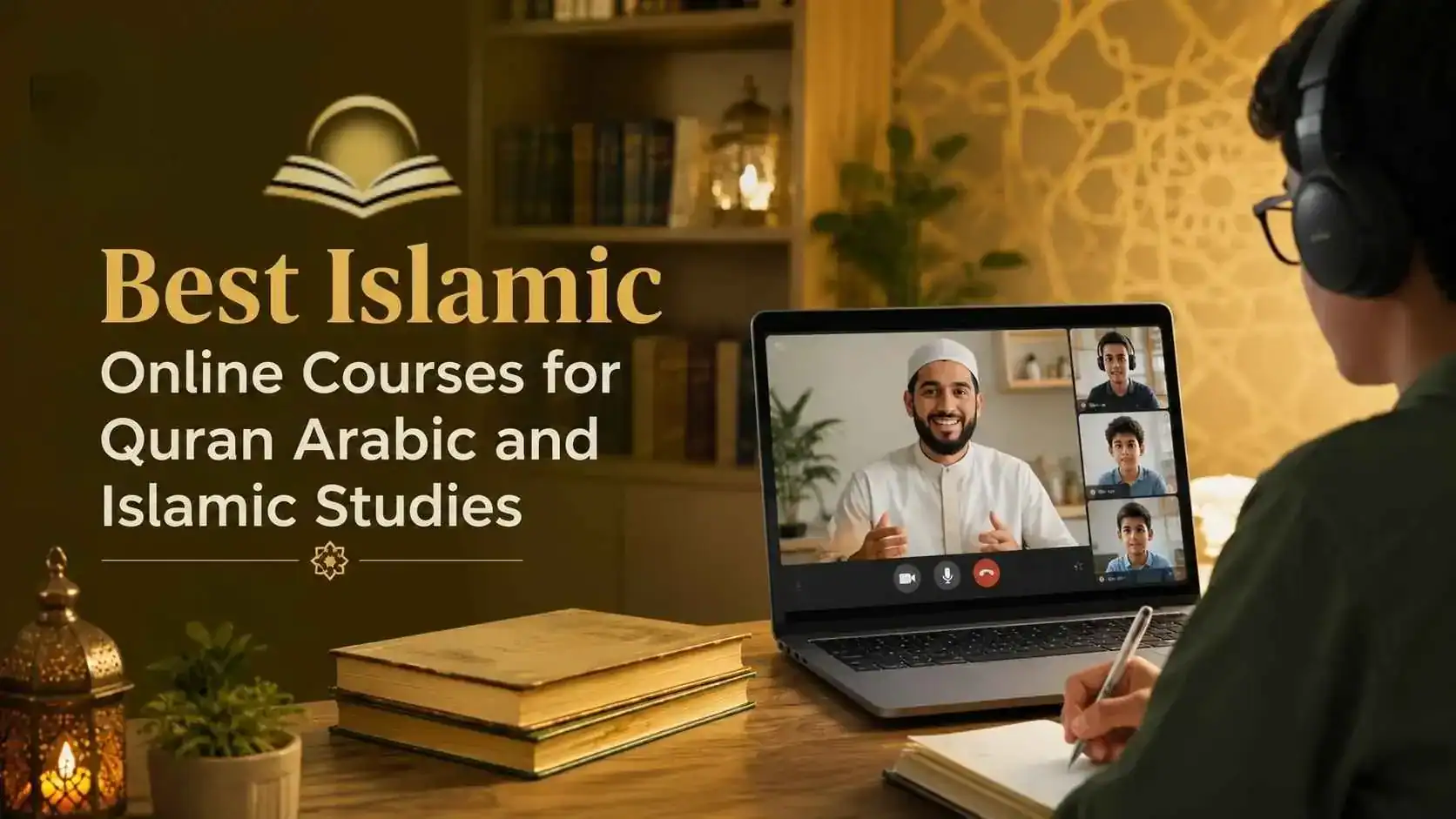
Requires a computer, tablet, or smartphone, a stable internet connection, and headphones that have a microphone. It’s also easier to concentrate when you’re in a quiet study area, and your teacher can easily hear you recite the text, which will help with pronunciation corrections during live lessons.
How can I stay motivated while studying Islam online?
Make goals (weekly goals are OK!) and stick to them; go to class regularly; and study the lessons every day, including a few minutes. You can also stay motivated and committed to long-term learning if you have a supportive teacher who is monitoring you and giving you regular feedback.