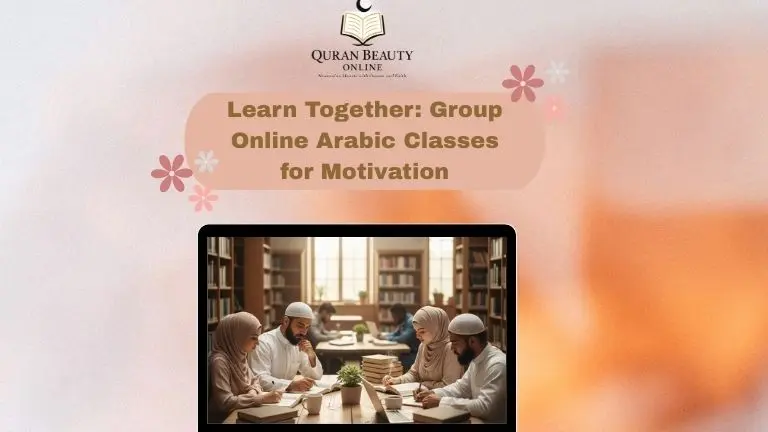
Learn Together: Group Online Arabic Classes for Motivation
Arabic is increasingly one of the most sought-after languages to study whether for individual career enhancement, cultural engagement, global travel, or a deeper understanding of Islam.
Across the United States, there are thousands of students and adults seeking well-organized and cost-effective ways to study Arabic online. With all the choices, group online arabic classes, apps, private tutors, and academies the question is: what’s the best way to actually make headway and stay motivated?
This is where small group online Arabic courses differ. They provide students with the perfect mix of organization, community, and affordability, three features that most students find hard to find in individual study.
Arabic is a rich and influential language in Islamic studies, as explained in educational references like Encyclopedia Britannica.
While online Arabic courses with a private tutor may provide individualized focus, they may be costly and lack social interaction. But learning in a small group environment offers friendly competition, practice sharing, and a sense of belonging that triggers motivation and frequency.
Group vs. Private: Why Group Classes Offer Superior Value

When deciding between group online Arabic classes and online Arabic classes with a private tutor, many learners assume that one-on-one sessions are automatically better.
But in reality, group classes can often provide more value for your money, especially for beginners and busy adults who need structure and motivation to stay consistent.
1. Cost-Effectiveness: Learn More, Spend Less
Let’s start with the most practical aspect, expense. Private lessons are great, but they’re pricey, usually around $25 to $60 an hour. Group Arabic classes, though, allow you to study along with others for a fraction of the price, sometimes as little as $8 to $20 an hour.
Which means: You can study longer, progress further, and even take several courses (MSA, conversation, Quranic Arabic) without burning your wallet.
At Quran Beauty Online, the group courses are designed with price in mind, with organized courses taught by experienced Arabic instructors, so learners can receive quality instruction without the sky-high cost.
2. Peer Interaction & Real Conversation Practice
Spoken Arabic is likely to be the most challenging part of learning Arabic. Numerous students will not want to practice speaking Arabic out loud, especially when learning alone or with their own instructor.
Group online arabic classes offer a setting where you can practice dialogue, role-play everyday encounters, and receive and provide feedback from other students with the same learning goals.
Such an interaction builds confidence and fluency more rapidly, and adds an element of fun that keeps students coming back to class time after time. For the average student, the group is a small community of encouragement and support.
3. Accountability & Structured Schedules
Consistency is the secret to mastering any language. With group classes, you adhere to a set weekly schedule, so it’s simpler to keep going. When you have others who depend on you to be in class, you’re going to keep showing up, even on busy days.
It’s the ideal setup for working professionals and students who do well with accountability and clear milestones.
Various programs, including those provided by Quran Beauty Online, run small group classes (typically 4–6 students) with permanent lesson lengths that are aligned with global and US-friendly schedules. This type of structure ensures that every student gets attention, practice, and a stable study rhythm.
4. The Optimal Group Size for group online arabic classes
And one of the most significant but often overlooked factors is group size. Too many students hinder engagement, and too few limit interaction. The optimal number? 6 students or fewer per class.
That many provides every learner with an opportunity to speak up often, pose questions, and receive individualized feedback from the instructor, without feeling hurried or forgotten.
At Quran Beauty, our small-class setting allows each student to receive individualized attention in a supportive, engaging setting.
Modern Standard Arabic (MSA) vs. Dialects: What Group Classes Teach

Of all the choices that new learners have, perhaps the most important one is what type of Arabic they want to study. Arabic is not like other languages; it is not one uniform form, it has several forms for different uses.
It takes knowing what each has to offer so you can choose the right set of online Arabic courses and set realistic goals from the start.
Modern Standard Arabic (MSA): The Universal Key
If your goal is to read, write, and understand Arabic across regions, Modern Standard Arabic (MSA) is your foundation. It’s the standardized form used in books, news broadcasts, formal speeches, and even the Quran (in a slightly more classical form).
MSA connects all Arabic speakers, it’s the bridge between dialects and the key to professional and academic fluency.
In beginner group online Arabic classes, MSA is usually where the journey starts as it lays the groundwork for grammar, vocabulary, and pronunciation knowledge that facilitates all subsequent learning.
Beginner and intermediate group classes at Quran Beauty Online emphasize MSA basics, making it easier for students to move towards both conversational and Quranic comprehension further down the line.
Suitable for:
- Examination and university program preparation students
- Arabic-speaking countries’ business professionals
- Students interested in reading religious or literary texts
Colloquial Arabic: Spoken for Life and Travel
If students are interested in speaking Arabic for day-to-day usage, the colloquial or “spoken” versions are paramount. These are the forms used in day-to-day dialogue, on social media, and in local communities, and each Arab country has its own special variant.
- The top dialects offered in group Arabic classes are:
- Egyptian Arabic (ECA): Worldwide known because of Egyptian media and culture.
- Levantine Arabic: Used in Syria, Lebanon, Jordan, and Palestine, soft and easy on the ears.
Learning with group conversation practice is especially helpful with dialects as it mimics real conversation. Communication with classmates strengthens pronunciation, confidence, and listening, exactly what you need to sound natural.
Conversational tracks in Egyptian Arabic are featured by Quran Beauty Online’s small-group lessons for learners ready to apply their skills in actual situations.
Suitable for:
- Travelers and expatriates
- Learners who want cultural fluency
- Social, communicative learners
Quranic or Classical Arabic: Language of the Revelation
If your motivation to learn Arabic is spiritual in nature, then Quranic (Classical) Arabic is the appropriate path.
It highlights Nahw and Sarf, the structure and rhythm of Quranic language. It’s offered in specialized group online Arabic classes, typically kept small to accommodate full discussions and precise pronunciation (Tajweed).
For Muslim learners interested in studying Quran, Hadith, or early Islamic works, it’s a richly rewarding choice.
Quran Beauty Online offers well-designed Classical Arabic courses intended for students who wish to engage more profoundly with the Arabic of the Quran and gain from the encouragement and debate inherent in studying in a group setting.
Suitable for:
- Islamic studies students
- Adult learners pursuing Quranic understanding
- Students refining Tajweed and grammar
Actionable Tip: Coordinate the Arabic to Your Intention
Prior to joining, question yourself:
- Do I want to use Arabic for communication? → Choose Egyptian or Levantine dialect.
- Do I want to read, write, or study professionally? → Start with Modern Standard Arabic.
- Do I want to learn the Quran? → Join a Quranic Arabic group course.
The best news? You don’t have to choose. Most courses, including those offered by Quran Beauty Online, integrate MSA and conversation Arabic into a single path of study, giving you balanced, functional fluency.
Starting Your Group Arabic Journey: Tips for Beginners

Beginning your Arabic learning journey can be both exciting and intimidating. The silver lining? With the right mindset and strategy, group online Arabic lessons make it easy, fun, and surprisingly effective to learn. Whether you are a complete beginner or returning to Arabic after several years of break, here are some simple but effective tips to help you get maximum benefit from your first course.
1. Learn the Alphabet Before You Begin
Arabic is beautiful due to its script, one that flows, is a delight to read, and well-established in sound. However, most new students are unaware how essential it is to first learn the alphabet of Arabic.
Most beginner online classes bunch together start with basic reading and writing, but with an early head start on learning the letters and sounds, you’ll be moving along much faster.
You don’t have to memorize everything prior to class, only get used to how letters join and transform into each other. Quran Beauty Online has beginners’ sessions and free resources that assist students in understanding the Arabic script in a step-by-step manner before enrolling in group classes.
2. Use the Group to Your Advantage
One of the greatest benefits of group online Arabic classes is the built-in support network. You’re not learning alone, you’re part of a motivated team with similar goals.
So speak up! Ask questions, participate in pair activities, and don’t shy away from making mistakes. Every new word spoken boosts your confidence.
Good interaction with fellow classmates not only improves your pronunciation but also makes you accountable. Try to organize a sporadic review or practice chat between classes, such interaction among peers can double your progress and make learning fun.
At Quran Beauty Online, teachers often ask students to get together outside of class hours for light practice chats, a low-key but effective way of making study become community.
3. Set Realistic Objectives and Track Your Progress
Arabic is a rich, subtle language, and it’s going to take some time to learn. Having realistic, attainable goals in mind makes the journey more rewarding and less intimidating.
Instead of shooting for fluency right off the bat, set yourself up for pragmatic wins:
- Week 1–2: Master the alphabet and daily greetings
- Week 3–4: Build simple sentences and catchphrases
- Month 2+: Start reading brief passages and following conversation
Consistency is stronger than intensity. Smooth progress through group online Arabic lessons will bring long-term rewards.
Remember: even native speakers are learning new words throughout their whole lives!
Most students find it more convenient to begin in a group because it disciplines and encourages them much longer than self-study apps or private study. This is why well-structured programs like ours at Quran Beauty Online emphasize group accountability and simple level advancement, best for working professionals or parents.
4. Balance Group Learning with Personal Study
While group sessions provide structure and practice, a little independent study between classes reinforces what you’ve learned.
Consider spending 15–20 minutes daily revising vocabulary, listening to Arabic podcasts, or reviewing your class notes.
If ever you need extra help in a specific skill, augment your group classes with private online Arabic lessons with Qari, some students find the individualized time helpful for pronunciation or grammar practice. Quran Beauty makes it easy to combine both options into a single program, giving students the advantages of group synergy and personalized feedback.
5. Keep Your Motivation Connected to Your Purpose
Arabic is not just a language, it’s a key to comprehending faith, history, and culture. Remember why you began. Whatever your desire is to read the Quran proficiently, converse when you travel, or connect with Arabic-speaking friends, remembering that reason inspires long-term motivation.
At Quran Beauty Online, every program, from beginner group Arabic lessons to advanced Tajweed and Quranic Arabic courses, is designed to nurture that sense of purpose. You’ll not only learn the language but also grow a deeper connection with its meaning and beauty.
Final Tip:
Be patient, be persistent, and most importantly, enjoy the ride. Every new letter, every new word, brings you closer to fluency and comprehension. With an open mind and a good group, Arabic success isn’t just a possibility, it’s a certainty.
Your Journey to Arabic Fluency Begins Now
Learning Arabic is not only a matter of memorizing vocabulary or grammar, it’s a path of connection, culture, and transformation. If your aim is to grasp the Quran, communicate fluently with native speakers, or open up more career doors, having the right learning strategy will determine your success.
Keep in mind, what really matters is not the format, but the quality of your learning environment.
That’s where Quran Beauty Online stands out. With tiny, interactive classes, certified native Arabic teachers, and friendly class schedules, it’s one of the top group online arabic classes for students who seek authentic, structured progress.
Each program blends cutting-edge instruction with the spiritual and cultural depth that make Arabic such a rich language to study.
So, if you’ve been waiting for the right moment to start your Arabic journey, this is it.
Join Quran Beauty Online today and start your free trial to master Arabic with confidence and purpose.
Your path to fluency begins with one decision and one class.