
MR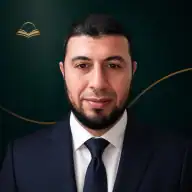 MaleArabic · English
Ustadh Mohamed Rajab
Quran, Hifz & Tajweed Teacher
- B.Sc., Faculty of Quran Sciences, Al-Azhar University
- Recitation · Hifz · Tajweed
- Tafsir · Fiqh
The Arabic language course at Quran Beauty Online teaches non-native speakers Quranic and Modern Standard Arabic in live, one-to-one Zoom classes of 30 minutes, from the alphabet to Quranic comprehension. Plans run from 2 to 5 classes a week for children, teens and adults.
Course at a glance
From $28 a month · 7-day full refund
An online Arabic language course is a live program where a native-speaking teacher teaches you to read, write, understand and speak Arabic over video calls. You learn Arabic online at your level and in your time zone.
You learn the 4 skills of reading, writing, listening and speaking, built on letters and sounds, basic grammar, practical vocabulary and Quranic phrases.
Reading starts with verses and short texts; writing starts with words and simple sentences.
The Arabic language course is designed for non-native speakers: complete beginners, parents booking for their children, and adults who want to understand the Quran in its original language.
Yes. You can learn Arabic online from scratch, because the course starts from the Arabic alphabet and basic sounds. You can join even if you have never seen an Arabic letter. Most students read short words and simple Quranic phrases after a few weeks of regular classes.
Online Arabic classes give you a teacher who hears your pronunciation and corrects it; an app can only check a tapped answer. An app won’t notice that your ح sounds like ه, or explain why a verb changed form.
Apps work well for vocabulary drills between classes.
| Live one-to-one class | Language app | |
|---|---|---|
| Pronunciation feedback | From a native teacher, every class | Limited or automatic |
| Grammar questions | Answered on the spot | Pre-written hints |
| Pace | Set by you and your teacher | Fixed lessons |
| Quranic Arabic | Built into the course | Rarely covered |
Quran Beauty Online gives you a native Arabic teacher, one-to-one classes and a structured path from letters to Quranic Arabic, with a full refund if you’re not happy within the first 7 days.
Teachers are native Arabic speakers with formal training in Quran and Arabic sciences, and many hold Ijazah in Quran recitation. They explain grammar simply, in English and Arabic, and slowly raise the share of Arabic as you improve.
All Arabic lessons online are one-to-one, so the teacher’s attention stays on you for the full 30 minutes. If you need more time on a rule, you get it.
This Arabic online course follows 3 levels, from Foundations to Building Fluency to Quranic Arabic. Each level builds on the one before.
Your teacher corrects pronunciation gently in every session and tracks your progress in reading, writing and pronunciation, adjusting your Arabic lessons online to your strengths and gaps.
Arabic language classes run in the morning, the evening or on weekends, in your own time zone: GMT in London, EST or PST in the US, AEST in Sydney.
Plans run from 2 to 5 classes a week. A student reading the Quran with understanding needs a different focus from a teenager learning to write.
Complete beginners, children, teenagers, adults, heritage learners and anyone learning Arabic to understand the Quran can join this online Arabic course.
In the Arabic language course, beginners start from the alphabet, letter sounds and simple words. The first goal is reading short words on your own, which usually comes within a few weeks.
Arabic classes for kids and teens use stories, repetition and short quizzes. The focus stays on correct letters, sounds and early Quranic reading, so lessons stay engaging without losing accuracy.
Adults focus on practical use: reading the Quran smoothly, knowing key vocabulary and using Arabic in worship and study. If you start later in life, the teacher slows the pace, reviews often and gives clear homework.
The advanced level is built around Quranic Arabic. You learn the words and sentence patterns that come up most often in the Quran, so you follow more of what you recite in prayer.
Heritage learners who grew up hearing Arabic, and students returning after a break, can start at their real level. The free trial shows what you already know, so you don’t repeat the alphabet if you don’t need to.
If you can speak some Arabic but struggle to read or write it, lessons can focus on fluent reading, spelling and building correct sentences.
Learn Quranic (Classical) Arabic if your goal is understanding the Quran, and Modern Standard Arabic (MSA) if you want to read news, books and formal texts. This course teaches both and doesn’t cover spoken dialects.
Most students start with the shared base and lean toward one side later.
| Quranic (Classical) Arabic | Modern Standard Arabic | |
|---|---|---|
| Used in | The Quran, hadith, classical books | News, books, official documents |
| Grammar | Same core grammar | Same core grammar |
| Vocabulary | Classical and religious terms | Modern terms, such as technology and politics |
| Best for | Understanding the Quran and prayer | Reading modern texts and formal speech |
Our Arabic language course covers 8 areas, from the alphabet and pronunciation to grammar, reading, listening, speaking and writing.
You learn the 28 letters, their joined forms and their sounds, including letters with no English match such as ع, ح and ق. Pronunciation is corrected in every class.
Most Arabic words grow from a root of 3 letters. Once you know that ك ت ب carries the idea of writing, kataba (he wrote), kitab (book) and maktab (office or desk) become easy to remember.
Nahw is the part of grammar that covers sentence structure and word endings. At this level, you learn the basic rules: nominal and verbal sentences, subject and predicate, and how endings change.
Sarf studies how words change form, such as a verb moving from past to present, or a noun becoming plural. You learn the most common patterns, which makes new words easier to recognize.
Reading starts with Quranic verses and short texts and moves to fluent reading with understanding. Most written Arabic leaves out short vowels, so comprehension grows with your vocabulary.
Listening practice uses clear Arabic audio and your teacher’s speech. Teachers raise the amount of Arabic they use in class until you can follow simple instructions without translation.
You start speaking in the first session, repeating real Arabic words, then build simple, confident phrases and daily expressions.
You write words first, then simple sentences, with attention to joined letter forms and common spelling mistakes such as confusing ة and ه.
The Arabic course has 3 levels: Foundations for beginners, Building Fluency for intermediate students and Quranic Arabic for advanced students.
Level 1 covers the alphabet, reading simple words and building a core vocabulary. It suits students with no Arabic.
Level 2 works on fluent reading, accurate pronunciation and understanding daily expressions.
Level 3 builds deeper understanding of Quranic Arabic and confident, natural comprehension of the text.
Your level is set in the free trial. The teacher checks what you can read, write and understand, then places you at the right level.
Each level’s length depends on how many classes you take and how much you practice. Students on 2 classes a week move more slowly than students on 5; your teacher gives an estimate after the trial.
The online Arabic language course works in 7 steps, from a free trial class to a plan that changes as your Arabic improves.
Book a free trial: a full session with no card and no pressure.
The teacher checks your reading, writing, listening and speaking to find your level.
You agree on a goal: reading the Quran with understanding, reading modern texts or speaking basic Arabic.
Your plan sets your level, your weekly classes and the skills to focus on first.
Each lesson is live practice: you read, listen, speak and write while the teacher guides you.
The teacher tracks your progress and shares feedback at weekly checkpoints.
As you improve, the teacher moves you to new skills, raises the share of Arabic in class or moves you up a level.
Steps 5 to 7 repeat as your Arabic improves, and your plan changes with you. Step 1 starts in your free trial class.
A typical 30-minute online Arabic lesson starts with review, introduces new vocabulary or grammar, gives you guided practice with live corrections and ends with your next steps.
The lesson opens with the words and rules from last time, so they stick before new material comes in.
The teacher introduces new words or a new rule, explained in English and Arabic, with examples from Quranic phrases or daily use.
You use the new material straight away: reading a short text, building sentences or answering questions in Arabic.
Mistakes are corrected during the lesson, gently and at the exact word, so you don’t take wrong habits home.
Before the lesson ends, the teacher sums up what you covered and what comes next.
Yes. Teachers give clear homework, so you always know what to practice before the next class.
Your Arabic teachers are native speakers with formal training in Quran and Arabic sciences, and many hold Ijazah in Quran recitation. Male and female tutors teach both adults and children, and explain lessons in English and Arabic.
MaleArabic · English MaleArabic · English
 FemaleArabic · English
 FemaleArabic · English · French
 FemaleArabic · English
 FemaleArabic · English
The course uses teacher-prepared lessons, Quranic verses, short Arabic texts and clear audio for listening practice. You don’t need to buy books before your first class.
Monthly plans of 2 to 5 classes a week, 30 minutes each, cost from $28 to $70 in the US and from £21 to £52 in the UK. In Canada and Australia, they cost from $39 to $97.
| Compare plans30-minute classes | 2 classesa week$28per month | SUITS MOST LEARNERS3 classesa week$43per month | 4 classesa week$56per month | 5 classesa week$70per month |
|---|---|---|---|---|
| Classes per month | 8 classes | 12 classes | 16 classes | 20 classes |
| Class length | 30 min | 30 min | 30 min | 30 min |
| Best for | Busy schedules | Most learners | Faster progress | A goal date, such as Ramadan |
| One-on-one live on Zoom | ✓ | ✓ | ✓ | ✓ |
| Male or female teacher | ✓ | ✓ | ✓ | ✓ |
| Weekly progress checkpoints | ✓ | ✓ | ✓ | ✓ |
| 7-day money-back guarantee | ✓ | ✓ | ✓ | ✓ |
| Free trial | Free trial | Free trial | Free trial |
Reading short words takes a few weeks, while full professional fluency takes far longer: the US Foreign Service Institute estimates about 88 weeks, or 2,200 class hours, for an English speaker.
That estimate assumes full-time study. On 2 to 5 classes a week, you get from 4 to 10 hours of class a month. For that reason, most students set goals by skill (reading the Quran with understanding, for example) instead of full fluency.
From scratch, most students read short Arabic words and simple Quranic phrases after a few weeks of regular classes. Understanding longer texts builds over the following months with practice and review.
Three Arabic classes a week is a good middle point for most learners. Choose 2 if your schedule is tight, or 4 to 5 if you want faster progress or have a deadline.
Do your homework before each class and add a short daily review of new words. Fifteen minutes a day keeps vocabulary fresh better than one long session on the weekend.
Your teacher tracks your reading, writing and pronunciation and shares feedback at weekly checkpoints. You can also track simple milestones yourself: reading a full page, writing a sentence without help, following a short recitation.
To learn Arabic language online, you need a laptop, tablet or phone with a microphone and speaker, a stable internet connection and a quiet space. A notebook for new words helps more than any app.
Your free trial is a full lesson with no card and no pressure, and your teacher sets your level and plan.
Still deciding? Your free trial class answers anything not covered here.
Yes. You can learn Arabic language online from zero, because the course starts with the alphabet and basic sounds. Most students read short words after a few weeks.
Yes. The Foundations level of this Arabic language course is built for students who have never studied Arabic, starting with letters, sounds and simple words.
The best course for non-native speakers is one with a live teacher, clear English explanations and a level-by-level path. Look for a free trial so you can test the teaching before you pay.
Classical Arabic is the language of the Quran and early Islamic texts; Modern Standard Arabic is its modern form, used in news and books. They share the same core grammar.
Yes. The advanced level is Quranic Arabic, and Quranic phrases appear from the first level, so you start understanding short verses early.
Yes. The course covers all 4 skills, though reading and Quranic understanding get the most weight. Spoken dialects are not taught.
Yes. Online Arabic classes for kids use stories, repetition and short quizzes, with male and female tutors trained to teach children.
Yes. In Arabic language classes for adults, you start from the alphabet, and teachers slow the pace and review often for students starting later in life.
Yes. Teachers explain in English and Arabic, and slowly increase Arabic until you can follow simple instructions without translation.
Most learners do well with 3 classes a week. You can pick from 2 to 5 classes, and change your plan later.
It depends on your weekly classes and practice. Your teacher gives you an estimate after the free trial, based on your starting level.
All lessons are live and one-to-one with your teacher. This Arabic online course has no pre-recorded lessons in place of a teacher.
Yes. Your teacher provides lesson material and gives clear homework after each class, so you don't need to buy books first.
You can ask for a male or female teacher. Other teacher preferences can be raised with the team when you book.
You can pick morning, evening or weekend times in your time zone. The academy does not publish a rescheduling policy, so ask the team before you subscribe.
An online Arabic language course here costs from $28 to $70 a month in the US and from £21 to £52 in the UK, plus a one-time registration fee.
Yes. Your first lesson is free, with no card needed, and you get a 7-day money-back guarantee if you subscribe and aren't happy.
The Arabic course page does not list a certificate. Ask the team in your free trial whether completing a level comes with one.
 Course Enrollment